


Blog
Case Hardened Blue Gems and Why Patterns Matter

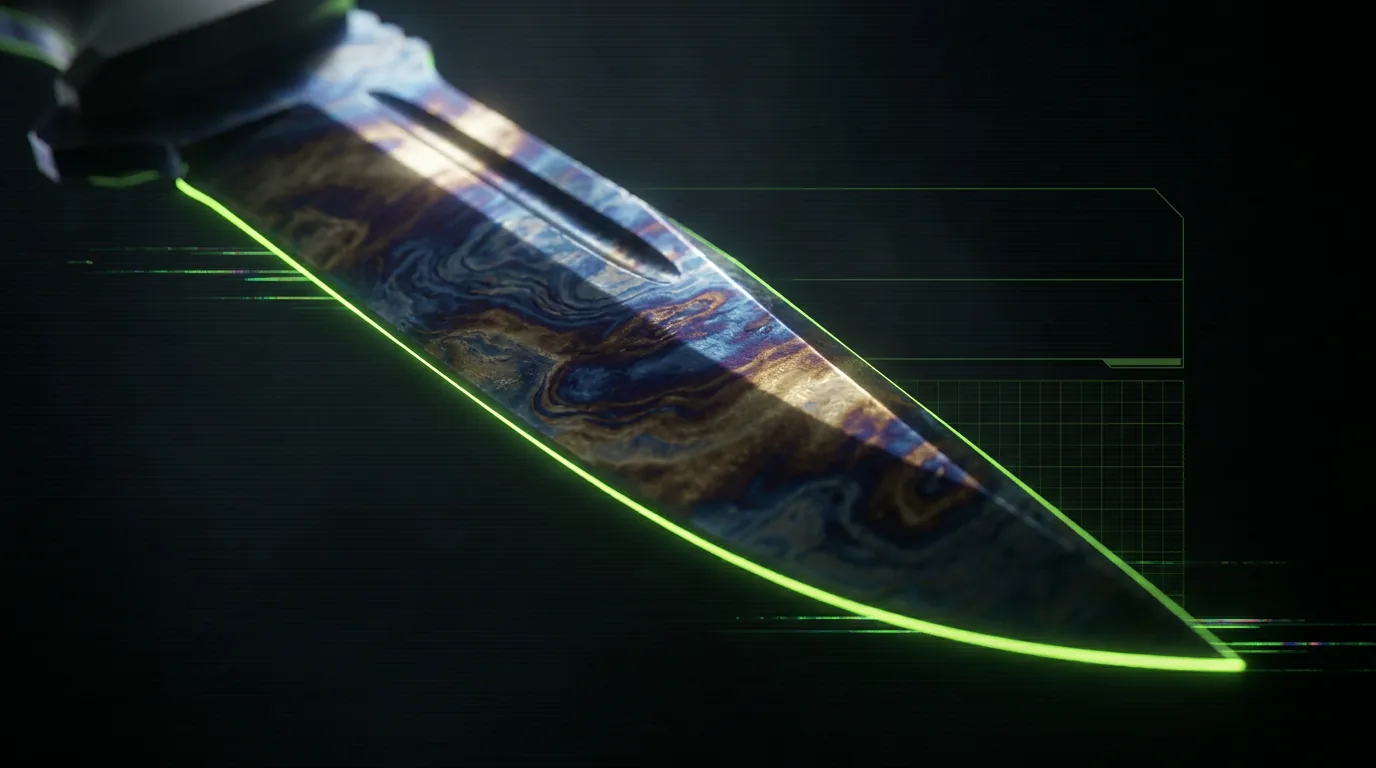
Case Hardened is the skin that made pattern trading a thing. Its texture is a randomised heat-treatment finish in blue, gold and purple, and where the blue lands is decided entirely by the pattern index. The result is a single skin whose copies range from cheap to legendary.
How the pattern works
The index shifts a large mottled texture over the weapon model. Because the model only shows part of that texture, small changes in the index radically change what you see. Some indexes put almost pure blue on the playside; most put a mix of gold, purple and blue.
Different weapons and knives use the texture differently, so the same index produces different results on an AK-47 than on a Karambit. Pattern tiers are always model-specific.
What counts as a gem
Broadly, three things:
- Blue coverage on the playside — the face you see while holding the weapon.
- Blue on the reverse — matters for inspect animations and for top-tier valuations.
- Purity — how little gold and purple interrupt the blue.
Community-maintained pattern tier lists rank the known indexes for each model. The top handful for AK-47 and Karambit are famous items with their own trading histories.
Why wear barely matters here
On a pattern-driven skin, wear is secondary. Battle-Scarred Case Hardened knives with strong blue routinely sell far above Factory New copies with an ordinary pattern. Some buyers even prefer the worn look, since the fading affects gold sections more visibly than blue.
Shopping sensibly
Two honest paths:
- If you want the blue — shop by images, expect to pay a premium, and verify the pattern against a tier list for that exact model before committing.
- If you just like the finish — buy an ordinary pattern in good condition. It is dramatically cheaper, it still looks like Case Hardened, and you are not paying a collector premium for a feature you were not shopping for.
The trap is paying gem money by accident. If one listing is priced far above its neighbours in the same condition, the pattern is why — and if the pattern is not what you came for, the neighbour is your item.